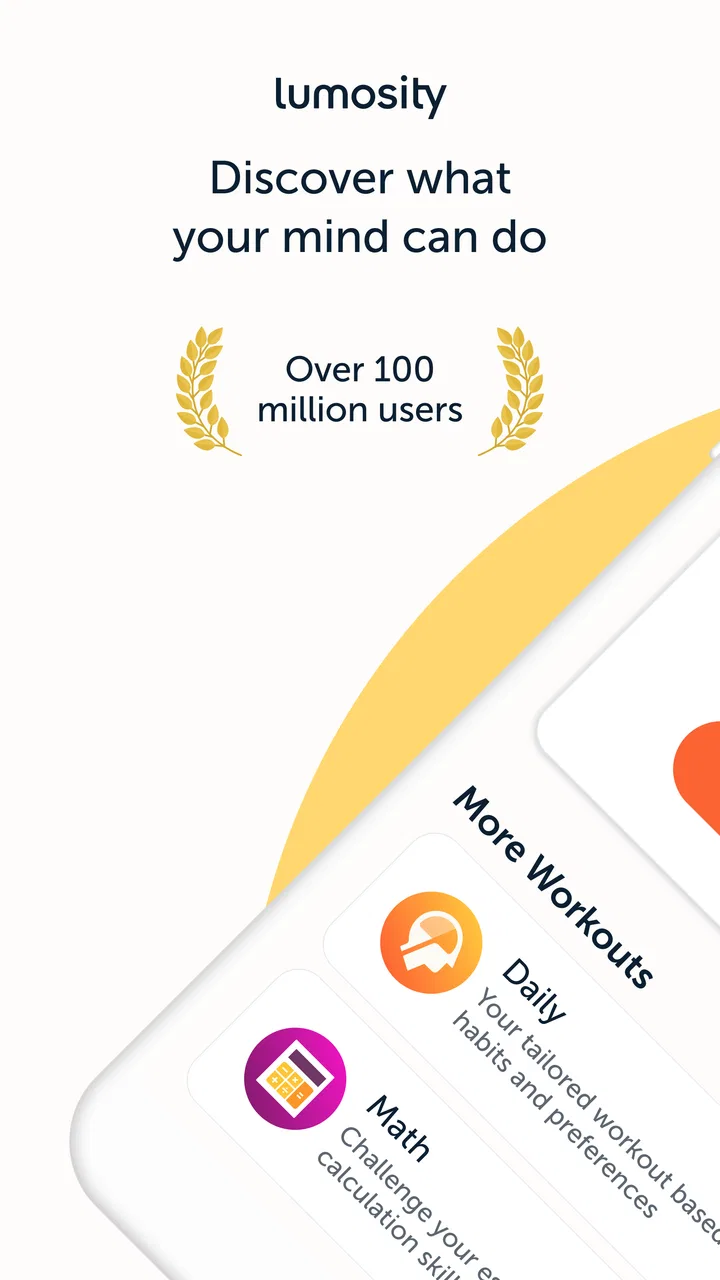
Lumosity: Brain Training Games
- 4.8
- Rating
- 10.00M
- Installs
- Free
- Price
 Analysis by App-foxy
I approached Lumosity: Brain Training Games as a short, repeatable learning app rather than something to play for hours at a time. That distinction matters. Its purpose is to give you small mental challenges focused on areas such as memory and problem-solving, then make the experience easy enough to return to regularly. I found the best results came when I treated each session as a focused break, not as a test of intelligence.
The app comes from Lumos Labs, Inc. and sits in the education category. It is free to install, rated for Everyone, and has reached over 10 million installs. Its 4.7 average from around 307 thousand ratings suggests that many people enjoy the format, although popularity should not be confused with a guarantee of measurable improvement. My view is more practical: it can be a pleasant way to exercise attention and recall, provided you understand what it is designed to do and what it cannot replace.
What to expect when you begin
The first impression is more like a guided routine than a traditional game collection. You are not opening a large world with a complicated story, nor are you expected to learn a long list of controls. The appeal is the quick mental task: look carefully, remember something, make a choice, or work through a problem while keeping distractions under control.
You May Also Like

 Blood Strike: 2.5 Anniversary
Blood Strike’s Loadouts Turn Every Drop Into a Tactical Gamble
A close look at Blood Strike’s custom loadouts: how fast access to signature weapons reshapes its battle royale rhythm, rewards preparation, and narrows the gap between fights.

 Pandora - Music & Podcasts
Pandora’s Music Is Easy to Start, but Harder to Recover
Pandora’s strength is its low-effort path from a seed to a station. Its weak spot is how much confidence it asks you to place in connection, setup, and quiet recovery.

 8 Ball Pool
 Is Built on Rivalries, Rematches, and Routine
A close look at the rivalries, rematches, shared routines, and unanswered safety questions that turn a quick pool match into a persistent mobile community.

 Samsung Music
’s Quiet Strength Is Playing What You Already Own
Its reach comes less from spectacle than from dependable access to a personal library. That simplicity is both the app’s strongest retention engine and its ceiling.

 AccuWeather: Weather Radar
AccuWeather Review: A Quick, Clear Forecast for Everyday Decisions
For everyday plans, the best forecast is the one you can understand quickly. AccuWeather makes rain timing, radar, and local conditions easy to act on, with a few trade-offs.

 Hill Climb Racing
Why Hill Climb Racing Still Turns Crashes Into One More Run
A tiny car, a bumpy hill and one more upgrade: Hill Climb Racing keeps resurfacing because its simple chaos makes every near-miss feel personal.
More From Our News Desk



That simplicity is useful for a first-time user. I did not need a gaming background, and the education label feels appropriate because the activities are built around practice rather than entertainment alone. At the same time, the presentation keeps the tone lighter than a workbook or a formal study platform. If you want a calm, structured way to fill a few spare minutes, the format makes sense.
The most important expectation to set is that this is not a replacement for learning a language, studying mathematics, preparing for an exam, or receiving professional cognitive care. The exercises may challenge skills that are useful in those situations, but success inside a short activity does not automatically transfer to every real-world task. I would use it as a supplement to a healthy routine, not as proof that my memory or reasoning had been scientifically transformed.
There is also a free-to-use boundary to keep in mind. You can start without paying, but optional in-app purchases range from $0.99 to $159.99 per item. That wide range makes it worth reading each purchase screen carefully before confirming anything. I recommend beginning with the free experience and deciding whether the routine itself is valuable to you before considering any optional upgrade.
Choosing the right moment for your first session
A common mistake is opening a brain-training app while already rushing between messages, work, and notifications. The activities depend on attention, so a distracted first attempt can make the app seem harder or less enjoyable than it really is. I had a better experience when I set aside a few uninterrupted minutes, lowered the pressure to perform, and treated the first session as orientation.
A realistic use case is a short break before lunch. Instead of scrolling through social media, you can complete a few challenges, notice which kind of task feels natural, and identify where you lose focus. Another useful moment is after commuting, when you want a deliberate transition before starting an evening activity. The app works best when it becomes a small habit with a clear place in your day.
It is less suitable when you need deep concentration for a long project. If your goal is to read a technical book, memorize a presentation, or build a specific academic skill, direct practice will usually be more efficient. Lumosity can warm up your attention, but it should not become a way of postponing the real work.
Setting up the experience without overthinking it
The initial setup is easier if you focus on the purpose of the routine instead of trying to predict your future performance. I would begin by deciding what you want from the app: a quick daily mental break, a way to challenge memory, or a structured alternative to passive phone use. That decision helps you judge the experience fairly later.
Since the app supports Android devices running Android 7.0 or later, compatibility is broad enough for many older phones as well as newer models. The current version is 10.19.84. Keeping the app updated is sensible for general stability, but I would not interpret a version number as a promise of a particular learning outcome. What matters more is whether the activities fit your attention span and whether you return to them willingly.
During setup, avoid turning the process into a performance contest. If the app asks you to make choices about your routine or interests, answer honestly rather than selecting what sounds most impressive. A routine built around your actual availability is more useful than an ambitious plan you abandon after a few days.
I also recommend checking the payment language at the moment it appears. The free starting point is convenient, but optional purchases can be substantial at the upper end of the listed range. A first-time user should distinguish between installing the app, trying its basic experience, and agreeing to a paid option. Those are separate decisions, and there is no reason to rush from one to the next.
The first successful action is simply completing one task carefully
Your first meaningful success does not need to be a high score. For me, it was completing an activity without tapping quickly just to finish. That sounds modest, but it establishes the right relationship with the app. I began watching the instructions, checking the full screen before responding, and accepting that an occasional mistake is part of the exercise.
For a new user, I suggest this simple sequence:
Read the instructions all the way through before making the first move.
Slow down for the opening attempts so you understand what the task is actually asking.
Notice whether an error came from forgetting, rushing, misreading, or losing focus.
Finish the activity instead of restarting immediately after a mistake.
Afterward, decide whether the challenge felt useful, enjoyable, or simply frustrating.
This approach gives you information that a score alone cannot provide. If you missed an item because you were answering before reading the prompt, the practical lesson is about patience. If you remembered the material but selected the wrong response, the issue may be attention to detail. That kind of self-observation is one of the more valuable parts of using a collection like this.
I would not chase a perfect result during the first visit. Early scores can be affected by tiredness, unfamiliar controls, screen size, and the simple fact that you are learning the format. A better first milestone is knowing how the activity works and finishing with enough curiosity to try again later.
How to turn short sessions into a useful routine
The app becomes more convincing when used consistently but lightly. I prefer a fixed occasion, such as after breakfast or during an afternoon pause, rather than opening it whenever I feel guilty about not being productive. A routine should feel manageable. If you make every session a demanding test, you may associate the app with pressure and stop using it.
One non-obvious benefit of a fixed time is that it helps separate skill from circumstance. If you always play while multitasking, the results mostly reflect distraction. If you choose a reasonably calm moment, changes in your experience are easier to interpret. This does not turn the app into a scientific assessment, but it makes your personal observations less chaotic.
Another useful habit is to keep a mental note of the type of challenge you avoid. People often repeat activities that feel comfortable and quietly skip the ones that expose weaknesses. I found it more informative to treat an awkward activity as a signal about where my attention needed work, while still avoiding the temptation to label one difficult session as a permanent limitation.
Short sessions also protect the app from becoming repetitive. Its basic idea is easy to understand, so extended use can feel less fresh than the first few attempts. I would rather stop while the experience still feels focused than continue until every task becomes automatic tapping.
Common confusion and the limits of the experience
The first confusion many users have is assuming that a brain-training result is equivalent to a general intelligence measurement. It is not how I would read the experience. A strong performance tells you that you handled that particular kind of activity well at that moment. A weaker performance may reflect fatigue, unfamiliarity, or distraction. The result is useful as feedback for the session, not as a complete description of your abilities.
Another point that deserves honesty is transfer. Practicing memory-oriented tasks can make you more familiar with those tasks, and problem-solving activities can encourage careful thinking. However, I would not promise that regular play will automatically improve grades, work performance, or everyday memory in a broad and dramatic way. If you want better recall for names, use names in conversation and write them down. If you want better exam results, study the actual material. The app can sit beside those methods, not replace them.
Some users may also wonder whether the free version is enough. My answer depends on your goal. If you only want to sample the style and create an occasional mental break, starting free is sensible. If you are looking for a more extensive or structured experience, you may encounter optional purchases. Because individual items can cost anywhere from $0.99 to $159.99, I would compare the value against how often you expect to use the app and whether its activities remain engaging after the novelty fades.
People sometimes ask whether the Everyone rating means the app is equally appropriate for every age and ability. It indicates broad content suitability, but it does not guarantee that every activity will feel comfortable for every person. Reading speed, attention span, visual preferences, and familiarity with mobile controls all affect the experience. I would give a child or older relative time to explore without turning the result into a judgment.
There is also a practical question about motivation. Gamified feedback can encourage you to return, but it can also make you focus on beating a previous result instead of paying attention to the process. When that happens, I reset my goal: complete the activity carefully, identify one source of error, and stop. That keeps the app from becoming another source of phone-related pressure.
Where it fits beside ordinary alternatives
Compared with crossword puzzles, number puzzles, or paper memory exercises, this app offers a more guided and immediately responsive format. You do not need to choose a puzzle from a newspaper or prepare materials. That convenience is its strongest advantage for people who want a ready-made activity during a short break.
Traditional puzzles still have important strengths. A crossword can build vocabulary through a rich context, while a logic puzzle may require sustained reasoning over a longer period. Those experiences can feel more satisfying if you enjoy depth and dislike rapid, self-contained tasks. I would choose a paper puzzle when I want to stay with one problem, and use Lumosity when I want several compact challenges.
It also differs from meditation apps and study tools. Meditation is aimed at calming and observing the mind, whereas these activities ask you to respond and solve. A study app usually teaches a defined subject with content that directly matches a goal. This app is broader and less tied to a particular curriculum. That makes it flexible, but also means you must supply the real-world purpose yourself.
For someone with a specific cognitive concern, a general consumer app is not the right first answer. A qualified professional can provide an assessment and targeted guidance that a collection of mobile activities cannot. Likewise, users who dislike timed-feeling challenges, scores, or repeated short exercises may be happier with reading, drawing, music practice, or a slower puzzle format.
My next step after the first few sessions
After the initial novelty, I would make one small decision: does this app improve the quality of my break, or does it merely give me another score to check? If it helps me pause, focus, and return to the day feeling more alert, it has earned a place in my routine. If I find myself rushing, comparing every result, or paying for options I rarely use, I would step back.
A useful experiment is to give yourself a short trial period without making a purchase. Use the same general time of day, keep sessions brief, and notice your behavior rather than expecting a dramatic transformation. Ask whether you understand the activities better, whether you are more patient with instructions, and whether you look forward to returning. Those answers are more meaningful than a single impressive result.
The app is also a good candidate for shared routine-setting. You can recommend the idea to a friend who wants a structured alternative to scrolling, but I would avoid turning it into a competition. Comparing habits can be motivating for some people and discouraging for others. The better conversation is about which activities feel engaging and what each person wants to practice.
My final judgment is positive but measured. Lumos Labs, Inc. has made an approachable education app that lowers the barrier to trying short memory and problem-solving exercises. Its free entry, Everyone rating, and large user base make it easy to consider, while the optional purchase range means you should remain attentive during checkout. The best reason to use it is not the promise of becoming smarter overnight; it is the chance to replace a few unfocused phone minutes with deliberate mental practice.
I would recommend it to a first-time user who wants gentle structure, enjoys compact challenges, and can treat results as feedback rather than a diagnosis. I would skip it, or choose a more specialized alternative, if my goal were exam preparation, professional assessment, deep puzzle solving, or a guaranteed solution to memory problems. Used with realistic expectations, Lumosity: Brain Training Games is an accessible way to begin a small attention habit—and the first successful step is simply completing one session thoughtfully.
FAQs for Lumosity: Brain Training Games
01What types of games does Lumosity offer?
Lumosity offers a variety of brain training games designed to challenge different cognitive skills, including memory, attention, flexibility, speed of processing, and problem-solving. Each game is crafted to target specific mental processes, providing a comprehensive workout for your brain. With over 40 games available, users can enjoy a diverse range of challenges daily.
02Is Lumosity suitable for all age groups?
Yes, Lumosity is designed for adults but can also be beneficial for teenagers and older children under supervision. The app adapts its difficulty based on the user’s performance, making it suitable for different cognitive levels. However, parents should ensure that younger users are engaging with the content appropriately.
03Does Lumosity require a subscription?
Lumosity offers both free and premium subscription options. The free version provides access to a limited selection of games and features, while the premium version unlocks the full library of games, personalized training programs, and in-depth performance tracking. Users can choose a monthly or annual subscription plan for premium access.
04How does Lumosity track progress and improvement?
Lumosity tracks progress using a personalized dashboard that updates after each session. Users receive insights into their performance across different cognitive areas, allowing them to see improvements over time. The app uses a metric called the Lumosity Performance Index (LPI) to compare cognitive performance with that of other users.
05Is an internet connection required to use Lumosity?
An internet connection is necessary for account setup and accessing new games and features. However, once logged in, some games may be available offline. To ensure optimal performance and access to all features, including progress tracking and updated content, it’s recommended to have a stable internet connection.
Pros
- Variety of games keeps sessions engaging.
- Tracks progress with detailed performance stats.
- Adaptive difficulty suits all skill levels.
- User-friendly interface enhances experience.
- Daily reminders help build a routine.
Cons
- Some features require a subscription.
- Limited free content can feel restrictive.
- Occasional technical glitches reported.
- May not cover all cognitive areas.
- Ads can interrupt the gaming flow.

Lumosity: Brain Training Games
Gallery